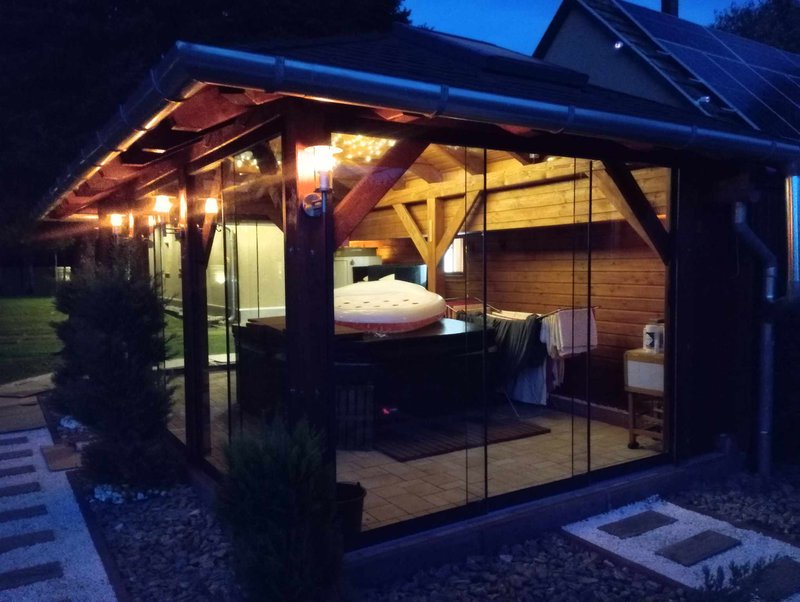
If on a polycarbonate patio roof If you’re thinking about it, you’re bound to have a few legitimate questions of your own. Won’t it turn yellow and fall apart in a few years? How well will it withstand rain or snow? And which type should we choose if we’re looking for the most durable option? In our latest post, we’re sharing lots of useful tips on this topic!
1. Which is the best polycarbonate sheet? Solid or multi-wall polycarbonate
A in the case of a terrace roof generally two main types We distinguish between: solid polycarbonate and multi-wall polycarbonate. Of these, multi-wall polycarbonate is by far the most common solution for patio roofing. This type is made up of several layers and air cells, which provide good thermal insulation (for example, during transitional seasons) and a favourable weight.
What’s more, multi-wall polycarbonate is generally strong enough to withstand hailstorms or snow loads, yet it is easy to install and reasonably priced.
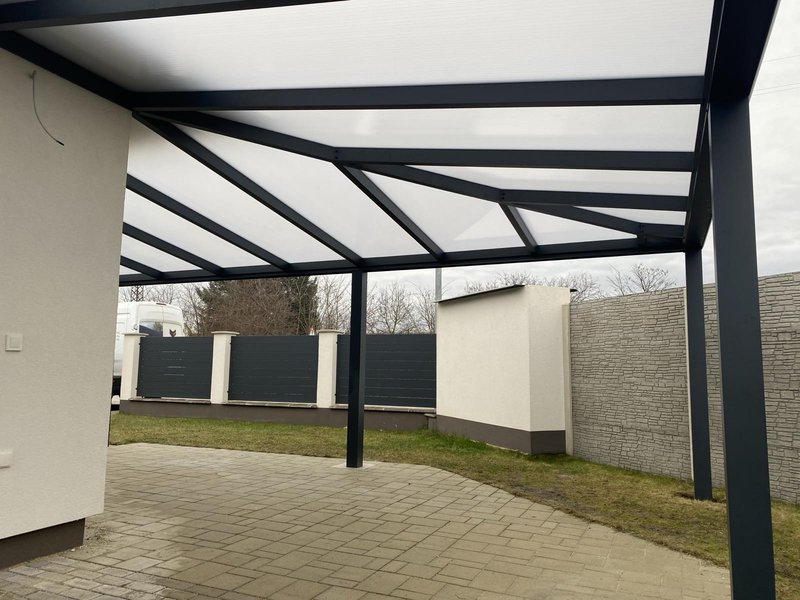
2. What is the ideal thickness of polycarbonate sheeting for a patio roof?
The correct thickness is of paramount importance for a number of reasons: on the one hand, it provides a more durable, more robust covering; on the other hand, it offers better thermal and sound insulation.
In Hungary, many companies specialising in patio roofing use 10 mm polycarbonate sheets; however, in many cases it does not provide sufficient stability on larger surfaces; it bends more easily, and the patter of rain or the wind can also cause a distracting noise. A 16 mm polycarbonate roof, for example, is thick enough to prevent the sound of the rain pattering down from echoing throughout the house. The At the Dream Terrace We also use high-quality 16 mm film stock like this.
Of course, in the case of a polycarbonate patio roof, Proper shading is essential: since this is a material that transmits light and conducts heat well, therefore during the summer heatwave, the air underneath can easily become very hot. These days, however, there are already numerous modern shading solution We can choose from these options, so the terrace can be comfortable all year round.
3. Clear, opal and bronze polycarbonate patio roofing
A with a crystal-clear finish A covered terrace is the closest thing to a classic glass roof. This version, in fact, It transmits approximately 80–85% of sunlight. The ideal choice facing north for terraces, or where the aim is to maximise light transmission – whilst optimising costs.
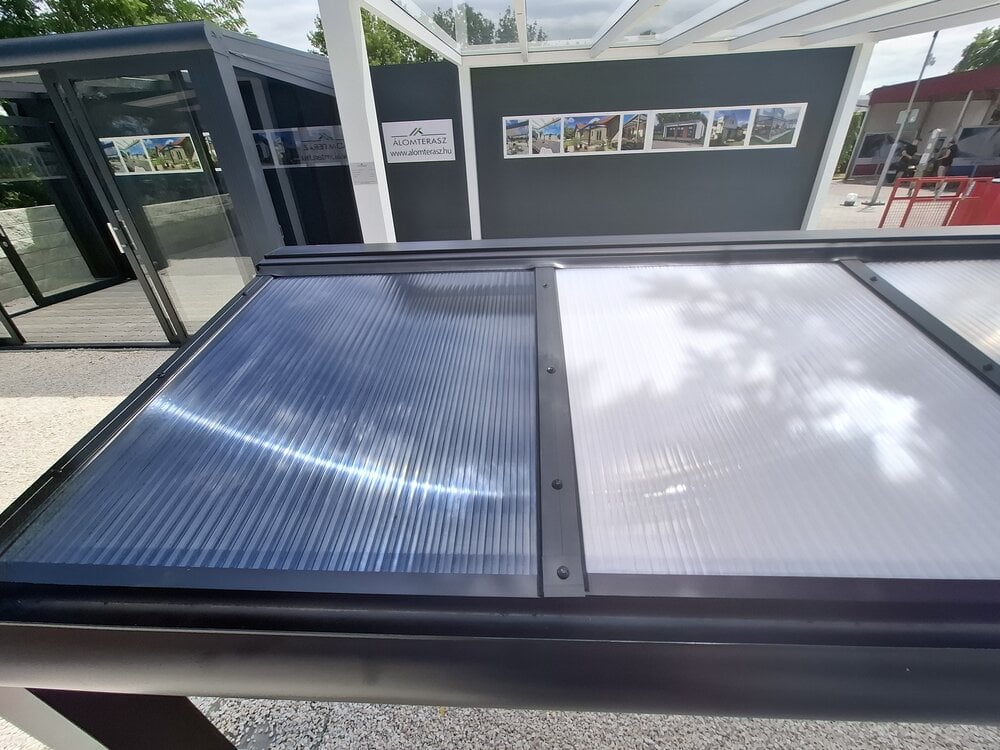
The opal finish In contrast, it diffuses light and softens the harsh sunlight (allows through approx. 50–60%), so we won’t feel „dazzled”, or dirt is also less noticeable on it. Generally speaking south-facing We recommend this alternative for these locations.
In addition, there is also bronze-coloured polycarbonate sheets, too, which are not the most popular option: merely 30-40%-át It lets the light through, and sometimes the incoming light takes on a strange, slightly „brownish” hue.
4. The lifespan of a polycarbonate patio roof: what does it depend on?
The expected lifespan of a high-quality, professionally installed polycarbonate patio roof 15–20 years, but there could be more. It depends depending on the quality of the polycarbonate sheet, maintenance and usage, and even the type of frame structure chosen.
High-quality polycarbonate sheets manufactured for terrace roofing are a with a special UV-filtering layer applied to the surface during manufacture (co-extruded) . This invisible shield protects the material’s structure from the harmful effects of solar radiation, ensuring that the disc retains its flexibility, transparency and impact resistance for decades.
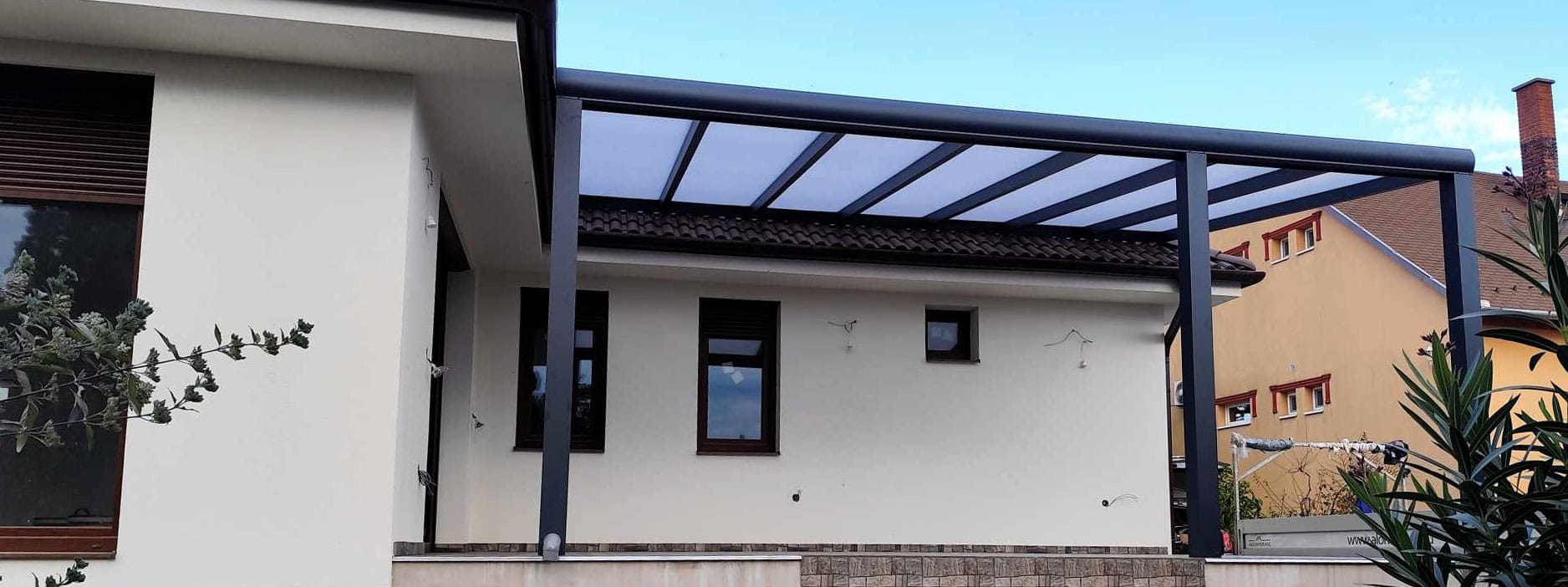
That said, a high-quality, powder-coated aluminium frame – such as Álomterasz Premium Aluminium Terrace – can also be an important step in terms of the terrace’s overall lifespan, as this is certain, provides a stable base for the covering and ensures a precise, gap-free fit enables.